
Spare Parts
We are a trusted provider of high-quality escalator systems and components, serving clients across commercial, residential, and public infrastructure projects.
With a strong focus on quality, timely delivery, and technical expertise, we offer a complete range of escalator parts designed to meet modern safety and performance standards. Our experienced team understands the complexities of escalator systems and is committed to delivering reliable solutions that keep your equipment running smoothly.
Escalators are an essential part of today’s vertical transportation systems. Commonly found in shopping malls, airports, metro stations, and multi-level buildings, they are designed to move large numbers of people efficiently and safely. Based on space, traffic flow, and architectural requirements, escalators can be customized in various forms—straight or curved, parallel or crisscross, long or compact. This flexibility makes escalators a preferred choice for high-traffic environments.
Understanding each escalator component is crucial for ensuring safe operation, long service life, and optimal performance. Below, we outline the key systems and parts that work together to deliver a smooth and secure escalator experience.
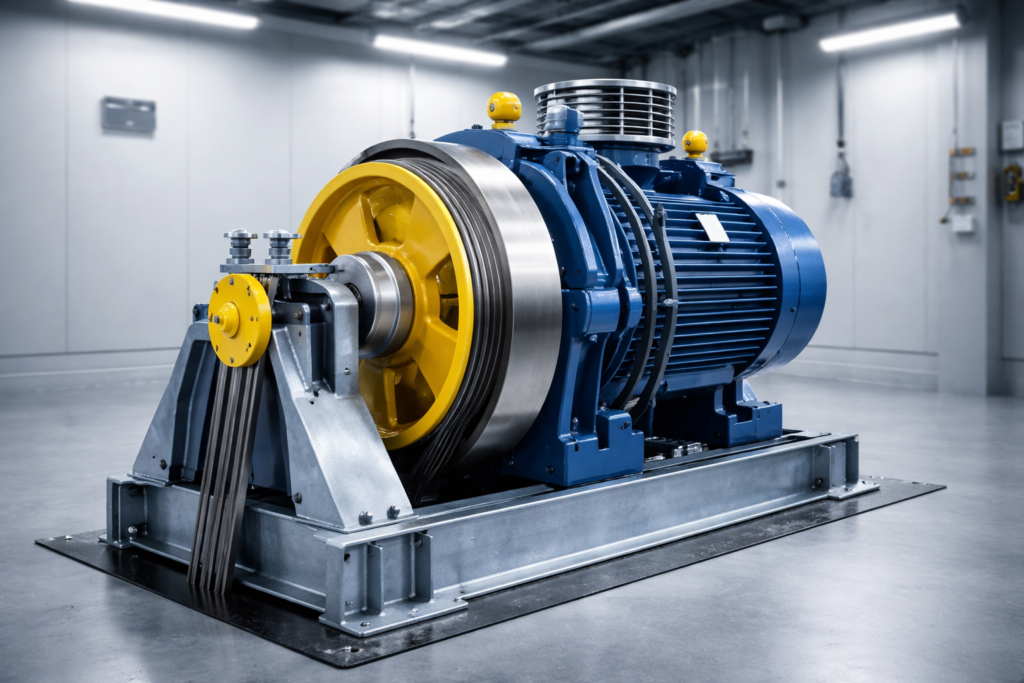
Drive System
The drive system is the heart of an escalator. It provides the power required to move the steps and handrails smoothly and consistently. A high-quality drive system ensures energy efficiency, low noise operation, and reliable performance even during continuous use. Our escalator drive systems are designed to handle heavy passenger traffic while maintaining safety, durability, and long service life.
Steps
Escalator steps are designed to provide a stable and slip-resistant surface for passengers. Made from high-strength aluminum or steel, the steps are carefully engineered for comfort and safety. Their grooved design allows dirt and moisture to fall through, keeping the riding surface clean and secure. Properly aligned steps ensure smooth movement and a safe riding experience.
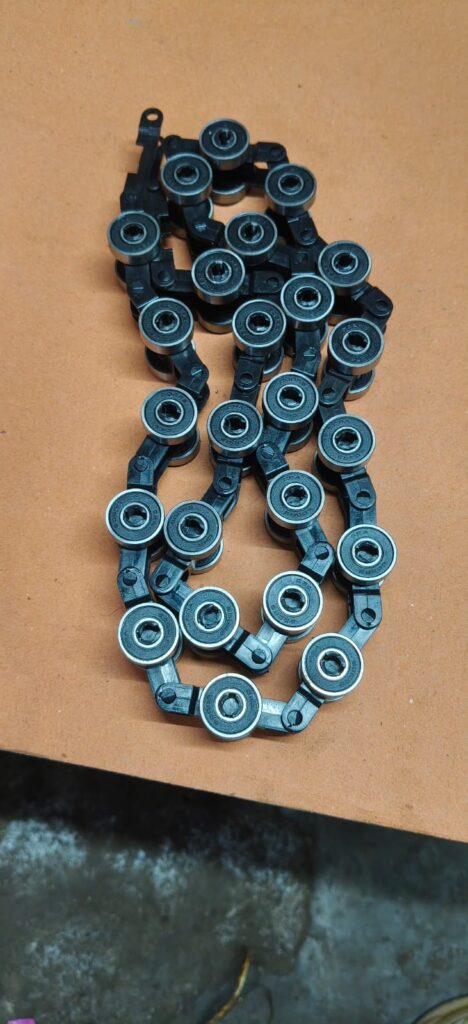
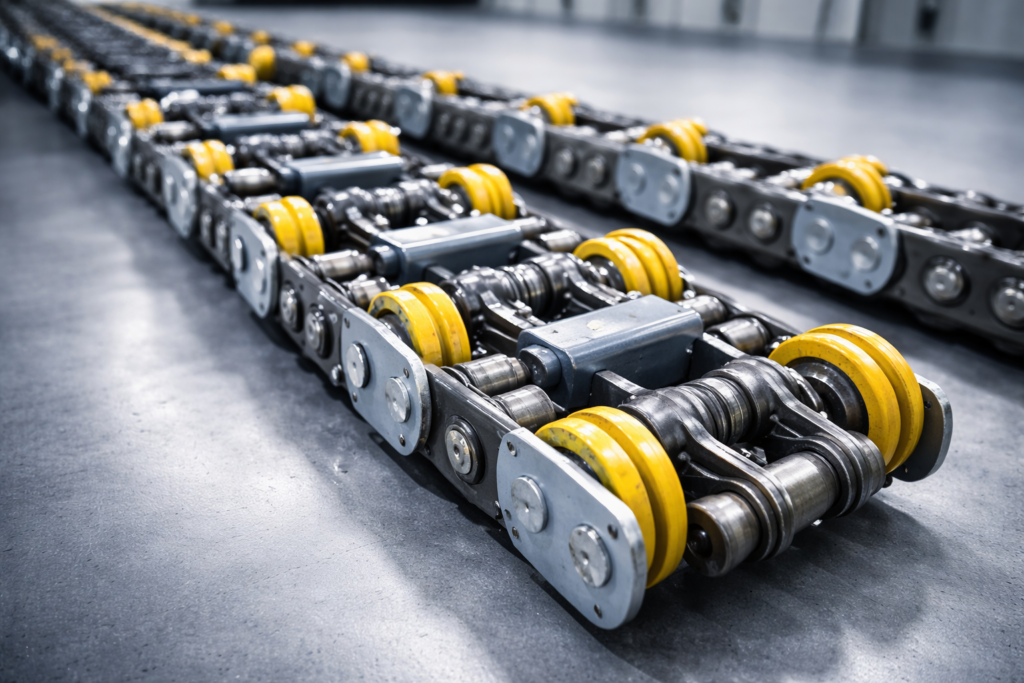
Step Chain
The step chain connects all the escalator steps and allows them to move in a synchronized loop. It is built using robust materials to withstand continuous load and movement. A well-maintained step chain ensures smooth operation, reduces vibration, and prevents sudden jerks. Regular inspection and lubrication help extend its lifespan and improve overall escalator performance.
Handrail
The handrail provides passengers with balance and support while using the escalator. It moves at the same speed as the steps to ensure comfort and safety. Made from durable, flexible materials, the handrail is resistant to wear, cracking, and environmental conditions. Proper tensioning and alignment are essential to ensure smooth movement and user confidence.
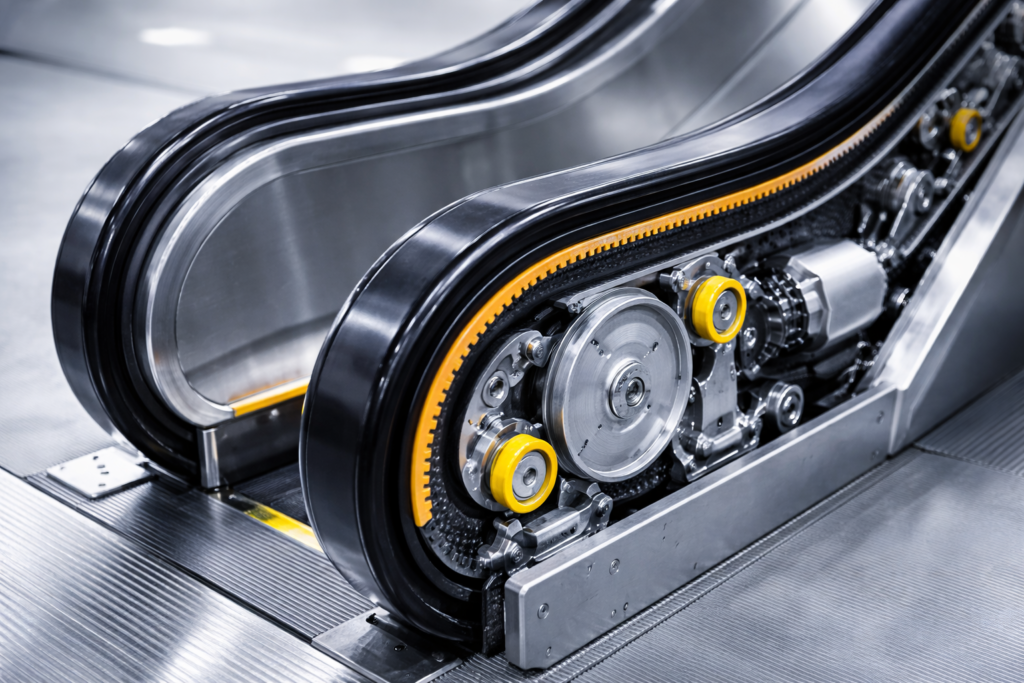
Landing Platforms
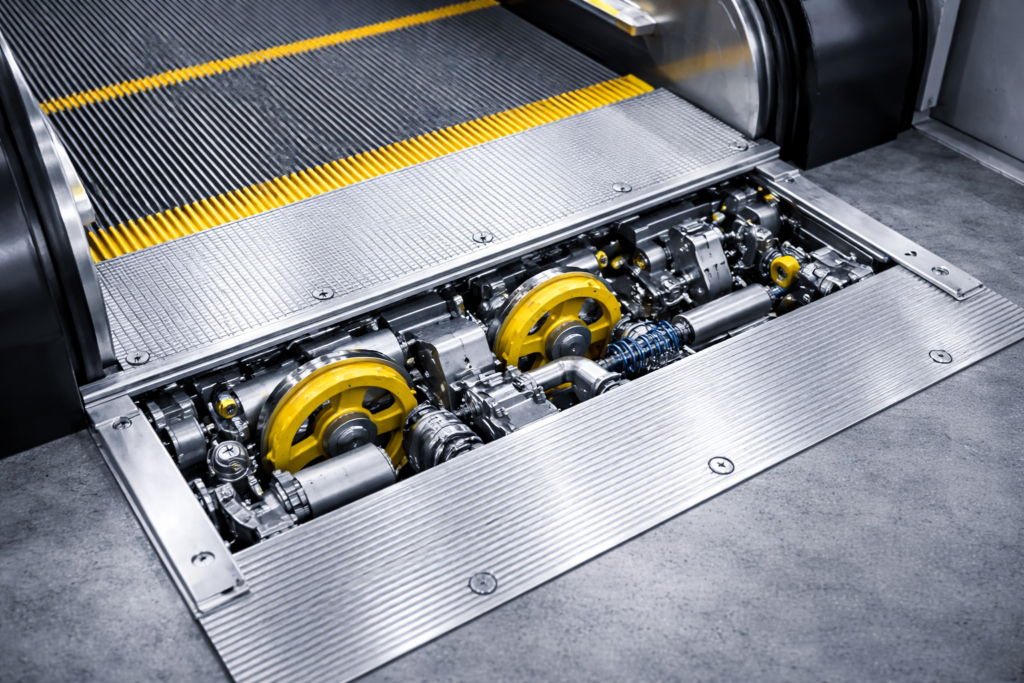
Landing platforms are located at the top and bottom of the escalator where passengers step on and off. These platforms are designed for stability, safety, and smooth transition. They include comb plates and safety features that help prevent entrapment and accidents. A well-designed landing platform improves passenger flow and ensures a safe entry and exit.
Tracks
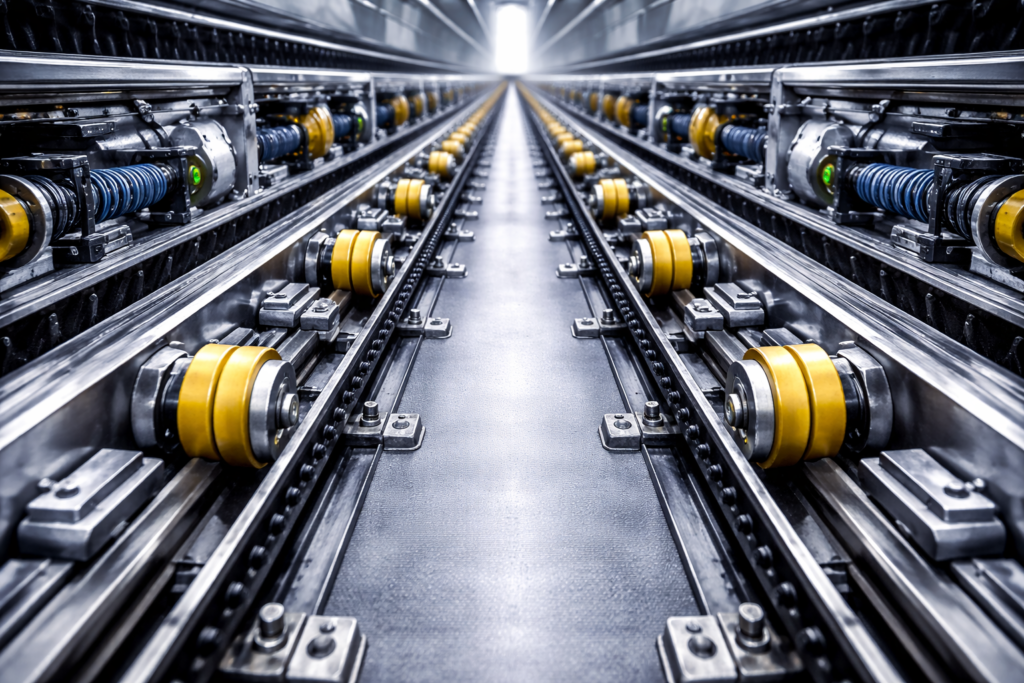
Tracks guide the movement of steps as they travel up and down the escalator. They ensure that steps remain level during the passenger ride and smoothly fold away at the landing areas. High-precision tracks reduce noise, vibration, and mechanical wear, contributing to a comfortable and quiet escalator operation.
Truss
The truss is the main structural framework of the escalator. It supports all mechanical and electrical components and provides overall stability. Manufactured using high-strength steel, the truss is designed to handle heavy loads and long-term usage. A well-constructed truss ensures durability, safety, and smooth alignment of all escalator parts.
Balustrade
The balustrade is the side panel of the escalator that supports the handrail and provides protection to passengers. It can be made from glass, stainless steel, or other durable materials to match modern architectural designs. The balustrade not only enhances safety but also adds a clean and professional look to the escalator.

Auto-Lubrication System
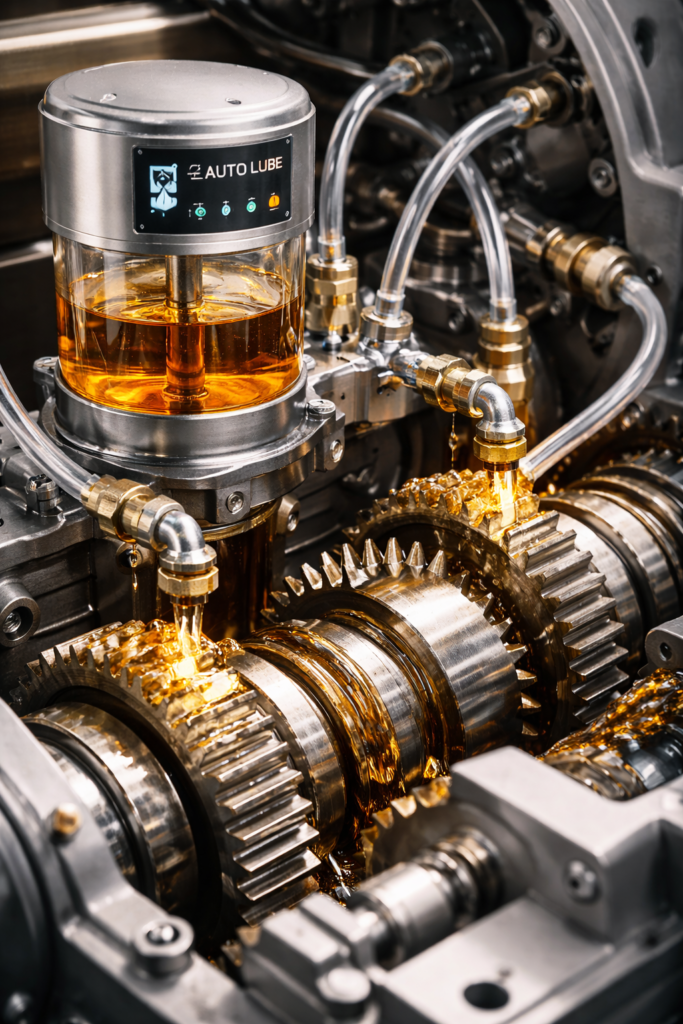
The auto-lubrication system automatically supplies lubricant to key moving components such as chains and bearings. This reduces friction, minimizes wear, and ensures smooth operation. By maintaining proper lubrication, the system helps extend component life, lower maintenance costs, and improve overall escalator reliability.
Braking System
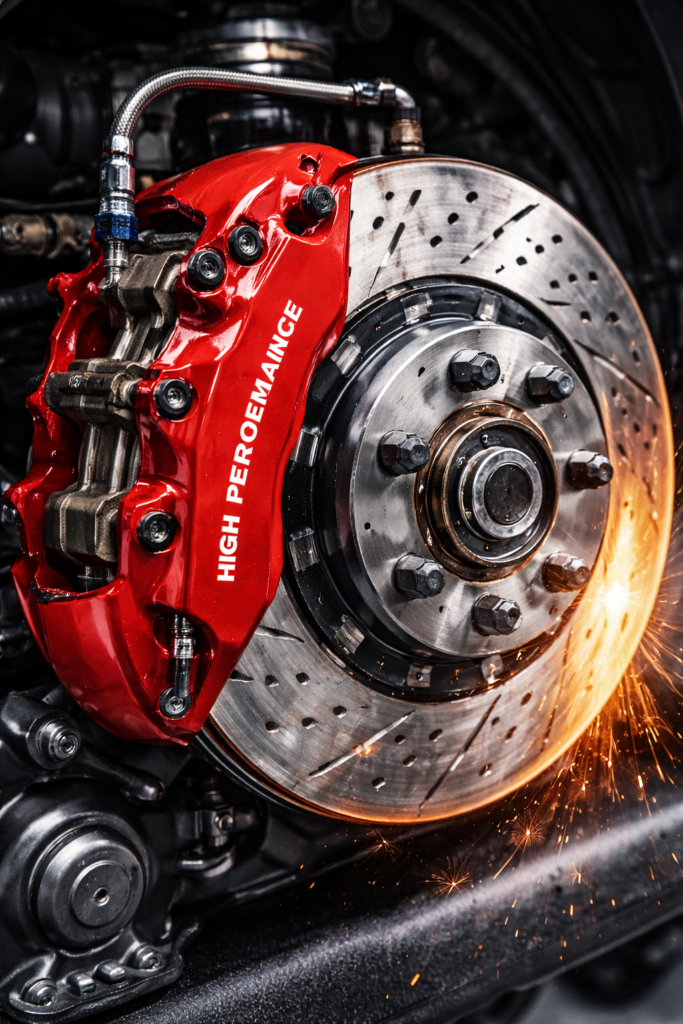
The braking system is a critical safety component that stops the escalator in case of emergency or power failure. It is designed to engage smoothly and securely, preventing sudden movements. A reliable braking system ensures passenger safety and protects the escalator from mechanical damage during unexpected conditions.

Safety Devices
Escalators are equipped with multiple safety devices to protect passengers and equipment. These include step chain sensors, handrail monitoring systems, emergency stop buttons, and obstruction detectors. Each safety device works together to detect abnormal conditions and immediately stop the escalator when necessary, ensuring maximum user protection.
Electrical & Control System
The electrical and control system manages the operation, speed, direction, and safety functions of the escalator. Advanced control panels monitor performance and detect faults in real time. Modern systems are designed for energy efficiency, smooth operation, and easy maintenance, ensuring reliable performance and enhanced passenger safety.
